PropellerAds Greatest Civil Engineering Feats Skip to main content

Greatest Civil Engineering Feats

The Akashi-Kaikyo Bridge, also known as the Pearl Bridge, has the longest central span of any suspension bridge. The central span is a staggering 1,991 meters, or 6,532 ft.

It took a century to overcome deep waters, strong winds, and high chance of earthquakes to build the Rion-Antirion Bridge. Completed in 2004, it spans the Gulf of Corinth and won an Outstanding Civil Engineering Achievement award.


The Netherlands North Sea Protection Works is a marvel of coastal engineering created to protect a large area of land around the Rhine-Meuse-Scheldt delta from the sea.


The Millennium Force Roller Coaster in Sandusky, Ohio, is the world’s tallest (310 feet) and fastest (92 mph) roller coaster, and is supported by 226 footers using 9,400 yards of concrete. It took 175 truckloads of steel to create the frame.


the Hoover Dam, standing 726.4 feet high, is one of the tallest concrete dams ever built and created one of the largest man-made lakes in the U.S.

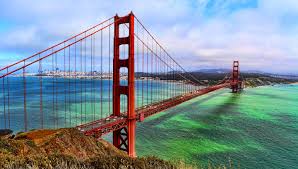
The Golden Gate Bridge is one of the longest suspension bridges in the world and has become an internationally recognized symbol of San Francisco and California.


The Channel Tunnel is one of the greatest civil engineering projects of the 20th century, has an ultimate design capacity of 600 trains per day each way under the English Channel.

The Burj Al Arab is a 5-star luxury hotel located in Dubai, United Arab Emirates. At 321 m (1,053 ft), it is the fourth tallest hotel in the world. The shape of the structure is designed to mimic the sail of a ship.

Comments

Popular posts from this blog

world's longest cable-stayed bridge-Russky Island, Russia

1. The bridge to Russky Island is the world's longest cable-stayed bridge, with a 1104 m long central span. 2. The bridge also has the second highest pylons after the Millau Viaduct and the longest cable stays. 3. The design of the bridge crossing has been determined on the basis of two primary factors: Shortest coast-to-coast distance in the bridge crossing location 1460 m. Navigable channel depth is up to 50 m. The locality of the bridge crossing construction site is characterized by severe climate conditions: temperatures vary from -31 °C to 37 °C; storms bring winds of up to 36 m/s and waves of up to 6 m in height; and ice formations in winter can be up to 70 cm thick. Total Length : 3100meters Width : 29.5m Height : 320.9m Longest Span  : 1104m Clearence  Above : 70m Building  Cost : $1.1 billionUSD Opened : 2012 Source : Wikepedia, Google

Second longest cable stayed bridge in North America-Port Mann Bridge

The widest bridge in the world (until the Bay Bridge's east span recently opened), the bridge east of Vancouver, B.C., which opened in 2012, remains the second-longest bridge in North America. The cable-stay bridge uses an impressive 288 cables to reach a total bridge length of 6,866 feet. The  Port Mann Bridge  is a 10-lane  cable-stayed bridge  that opened to traffic in 2012. It is currently the second longest cable-stayed bridge in North America and was the widest bridge in the world until the opening of the new  Bay Bridge in California .  The new bridge replaced a steel arch bridge that spanned the  Fraser River , connecting  Coquitlam  to  Surrey  in  British Columbia  near  Vancouver .  The old bridge consisted of three spans with an  orthotropic deck  carrying five lanes of  Trans-Canada Highway  traffic, with approach spans of three steel plate girders and ...

Famous Civil Engineers of All Time - Part II

1. John Bradfield Dr. John Jacob "Job" Crew Bradfield CMG (26 December 1867 – 23 September 1943) was a prominent Australian engineer who is best known for his work overseeing the design and building of the Sydney Harbour Bridge. Bradfield was the designer and consulting engineer for the Story Bridge, Brisbane. He also designed the Cataract and Burrinjuck Dams. In October 1938 Bradfield published a proposal (known as the Bradfield Scheme) for diverting some coastal rivers of Queensland onto the western side of the Great Dividing Range. However, it was never implemented. Bradfield designed the Circular Quay railway station. 2. John Rennie the Elder John Rennie FRSE FRS (7 June 1761 – 4 October 1821) was a Scottish civil engineer who designed many bridges, canals, and docks. In 1791, he moved to London and set up his own engineering business, having by then begun to expand into civil engineering, particularly the construction of canals. His early projects i...